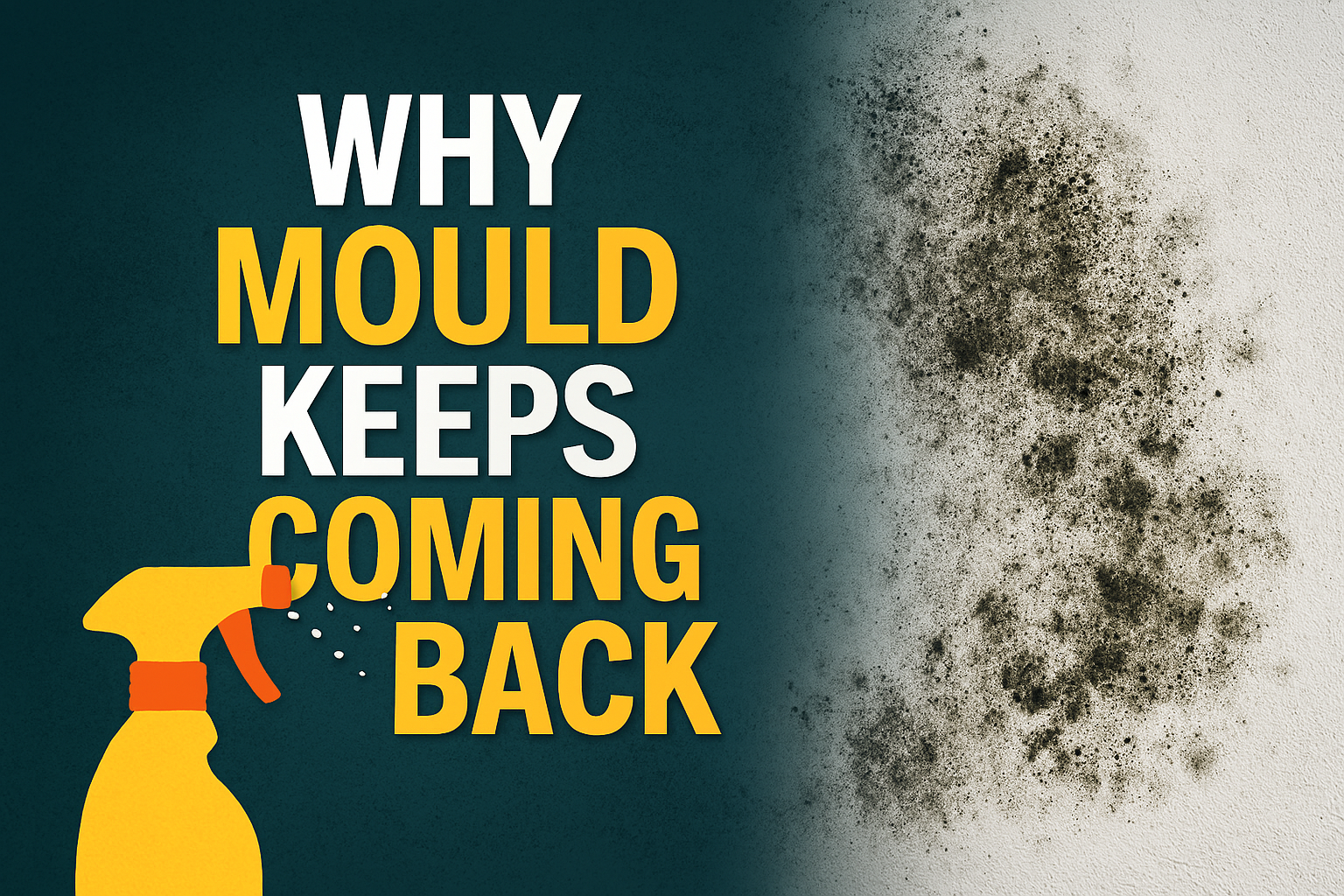
Why Mould Keeps Coming Back: Real Causes
If you’ve scrubbed mould off your walls, repainted the bathroom, or blasted the black spots on your window frames—only to see them return a few weeks later—you’re not alone. Recurring mould is one of the most frustrating home maintenance problems, especially in older or poorly ventilated homes. The good news is that mould almost always comes back for predictable reasons, and once you understand the root causes, you can finally break the cycle.
This guide explains why mould keeps returning, the hidden factors most people overlook, and what you can do to stop it from coming back again.
- You’re Treating the Mould, Not the Cause
Most people clean mould with a spray, wipe it away, and assume the job is done. But mould is a symptom, not the problem itself. The real issue is excess moisture.
Mould thrives when three conditions exist:
- Moisture
- Poor ventilation
- Cold surfaces
If you remove the mould but leave the moisture problem untouched, it will return—often in the exact same spot.
Cleaning products remove the visible mould, but they don’t fix: - Condensation
- Damp air
- Cold walls
- Poor airflow
- Leaks
- High humidity
Until the underlying moisture source is addressed, mould will continue to grow back.
- Condensation Is Constantly Feeding the Problem
Condensation is the number one cause of recurring mould in UK homes. It forms when warm, moist air hits a cold surface—like a window, exterior wall, or bathroom tile.
You’ll see condensation most often:
- On bedroom windows in the morning
- On bathroom walls after showers
- On kitchen tiles after cooking
- On cold corners of rooms
Where condensation appears, mould usually follows.
If you wipe away mould but the condensation keeps forming, the mould will return because the surface is repeatedly getting damp.
- Poor Ventilation Traps Moisture Indoors
Modern homes are more airtight than ever. While this is great for energy efficiency, it also means moisture has fewer ways to escape.
Common ventilation issues include:
- No extractor fan in the bathroom
- Extractor fan that doesn’t run long enough
- Blocked or closed trickle vents
- Never opening windows
- Drying clothes indoors
- Poor airflow in wardrobes or cupboards
When moisture gets trapped, humidity rises—and mould thrives.
Even if you clean mould perfectly, poor ventilation will recreate the same damp conditions that caused it in the first place.
- Cold Surfaces Create the Perfect Environment
Mould loves cold surfaces because they attract condensation. This is why mould often appears in:
- External corners of rooms
- Behind furniture
- On north‑facing walls
- Around window frames
- On uninsulated ceilings
If a surface is consistently cold, moisture will settle there again and again.
Cleaning the mould doesn’t warm the wall. So unless you improve airflow or insulation, the mould will return.
- Hidden Moisture Sources Are Being Missed
Sometimes mould keeps coming back because there’s a moisture source you haven’t spotted yet.
Common hidden causes include:
- A small leak behind a wall
- Dripping pipes under sinks
- Damp patches behind wardrobes
- Poorly sealed windows
- Cracked grout or silicone
- Rising damp in older homes
Even a slow, tiny leak can create enough moisture for mould to grow repeatedly.
If the mould always returns in the same spot, it’s worth checking for hidden damp.
- Using the Wrong Cleaning Products
Not all mould removers are equal. Some household cleaners remove the stain but don’t break down the mould properly. Others drip off vertical surfaces before they can work.
This leads to:
- Mould returning quickly
- Stains reappearing
- Spores remaining in the surface
Foam mould removers cling to walls and grout, giving the active ingredients time to work. Gel mould removers are ideal for silicone seals and corners. Spray mould removers are best for large areas.
If you’re using a weak cleaner or wiping too soon, the mould may never be fully removed—so it grows back.
- Moisture Absorbers Aren’t Being Used Where Needed
Moisture absorbers and dehumidifier bags are simple, low‑cost tools that help prevent mould from returning. But many people only use them after mould appears, not before.
They’re especially effective in:
- Wardrobes
- Bedrooms
- Window sills
- Cupboards
- Bathrooms
- Small rooms with poor airflow
If you clean mould but don’t reduce humidity, the mould will return because the air is still too damp.
- Bathrooms and Kitchens Produce More Moisture Than You Think
Everyday activities release surprising amounts of moisture:
- A single shower releases up to 1 litre of water into the air
- Cooking without lids adds moisture to the room
- Boiling water increases humidity
- Dishwashers release steam
- Washing machines add moisture to the air
If extractor fans aren’t used—or aren’t powerful enough—this moisture lingers and settles on cold surfaces.
This is why mould often returns in bathrooms and kitchens even after thorough cleaning.
- Furniture Is Blocking Airflow
When furniture is pushed tightly against a cold wall, air can’t circulate. This traps moisture and creates a perfect mould hotspot.
Common problem areas include:
- Behind wardrobes
- Behind sofas
- Under beds
- Inside cupboards
Even if you clean the mould, it will return if the airflow remains blocked.
- The Home Is Simply Too Humid
Some homes naturally have higher humidity due to:
- Poor insulation
- Single‑glazed windows
- Cold external walls
- High occupancy (more people = more moisture)
- Lack of heating in certain rooms
If humidity stays above 60%, mould will keep coming back no matter how often you clean it.
How to Stop Mould Coming Back for Good
Here’s the simple formula:
- Remove the mould properly
Use a foam, spray, or gel mould remover depending on the surface. - Reduce moisture
Use moisture absorbers, dehumidifier bags, or a small electric dehumidifier. - Improve ventilation
Open windows, use extractor fans, and keep trickle vents open. - Warm cold surfaces
Improve airflow, move furniture slightly away from walls, or use insulation where possible. - Fix hidden damp
Check for leaks, cracked grout, or poorly sealed windows.
Final Thoughts
Mould keeps coming back because the conditions that caused it never changed. Cleaning removes the visible problem, but moisture, cold surfaces, and poor ventilation recreate the perfect environment for mould to grow again.
Once you tackle the underlying causes—not just the mould itself—you can finally break the cycle and keep your home clean, dry, and mould‑free.