Can You Paint Over Black Mould with Zinsser BIN Without Washing It First?
Disclaimer: This article contains affiliate links. If you purchase through a link marked with (Ad), we may earn a small commission at no extra cost to you.
The Short Answer:
No, you cannot paint over black mould with Zinsser BIN without washing and treating it first. Zinsser BIN is a shellac-based stain blocker, not a fungicide. If you paint directly over live mould, the primer will fail to adhere to the powdery surface, the paint will eventually peel off, and the live fungal spores will remain dormant beneath the surface, ready to break through the moment moisture returns. You must kill the mould first.
What Happens If You Paint Directly Over Live Black Mould?
When staring at a highly stained, mould-covered bathroom ceiling, the temptation to simply open a tin of premium primer and paint over the nightmare is incredibly strong. Zinsser BIN is famous in the UK decorating trade for covering almost anything—water stains, smoke damage, and nicotine.
However, black mould (Stachybotrys or Aspergillus) is a living biological organism, not an inert stain. Painting over it without proper preparation leads to two massive failures:
1. Catastrophic Paint Adhesion Failure
For paint or primer to stick to a wall, it needs a clean, solid, and dry surface. Black mould creates a powdery, textured layer of spores and biological mass on top of your plaster. If you roll Zinsser BIN directly over this, the primer bonds to the layer of mould dust rather than the actual wall. Within a few months, as the bathroom heats up and cools down, the heavy primer and topcoat will crack, flake, and peel away in large sheets, leaving a much bigger mess than you started with.
2. Dormant Spores Waiting to Erupt
Painting over mould is the equivalent of sweeping dirt under a rug. While Zinsser BIN creates a hard shellac film that temporarily starves the mould of air and moisture, it does not kill the root system embedded in your plaster. The mould simply goes dormant. The moment your topcoat suffers a microscopic hairline crack, or your room humidity spikes in the winter, the mould will reactivate, feed on the moisture, and push straight back through your expensive new paint job.
Does Zinsser BIN Actually Kill Mould?
There is a persistent DIY myth that Zinsser BIN kills mould because it contains alcohol (methylated spirits).
While high-concentration alcohol can desiccate (dry out) some surface bacteria, the flash-off rate of Zinsser BIN is incredibly fast—it dries in about 15 to 45 minutes. This is not enough contact time to penetrate deep into porous plaster and destroy the microscopic roots (mycelium) of a heavy black mould infestation.
Zinsser BIN is arguably the best stain blocker on the market. Once the mould is dead, BIN is the perfect product to ensure the ugly black shadow doesn’t bleed through your final coats of paint. But it is a sealer, not a biocide.
The Correct 3-Step Method for Painting Over Mould Stains
To permanently eradicate the mould and achieve a flawless, long-lasting decorative finish, you must separate the job into three distinct phases: Kill, Seal, and Protect.
Step 1: Destroy the Roots (Do Not Use Bleach)
You must chemically destroy the mould before a paintbrush ever touches the wall. Do not use supermarket bleach. Bleach is mostly water; it bleaches the colour out of the mould but leaves the roots alive inside the plaster, actively feeding them moisture.
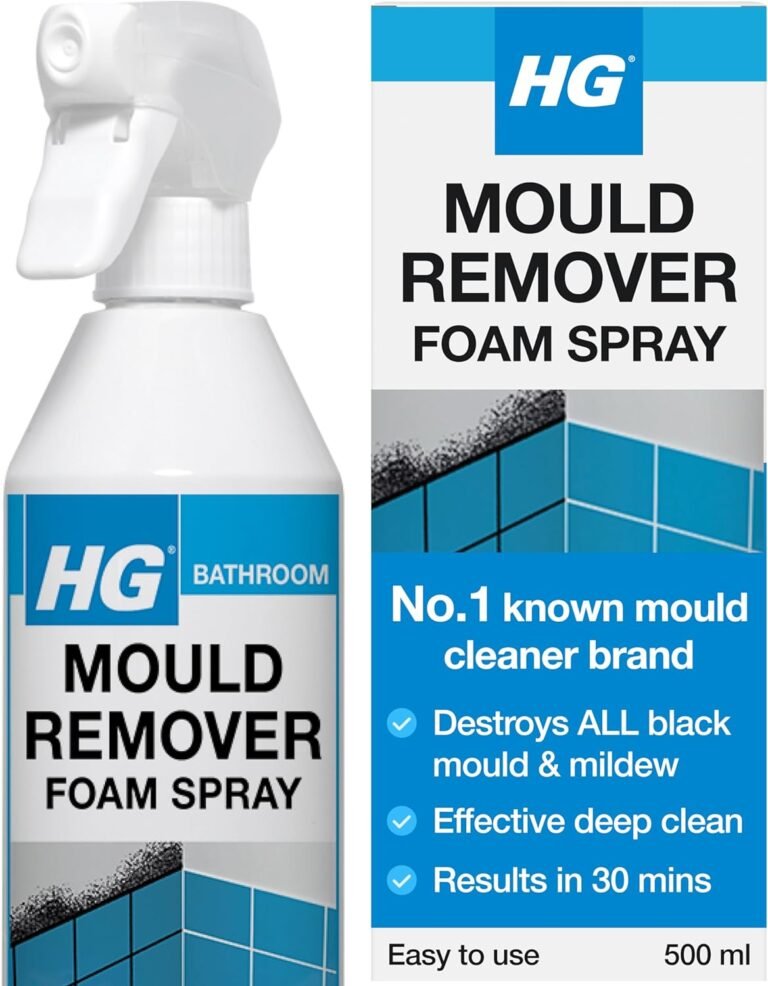
Instead, you need a professional fungicidal wash. We highly recommend using (Ad) HG Mould Spray or a dedicated biocidal cleaner.
- Spray the affected area thoroughly and let it sit for 30 minutes to penetrate the plaster.
- Wipe away the dead organic matter with a damp microfibre cloth.
- Throw the cloth away immediately to avoid spreading spores.
- Allow the wall to dry completely (this may take 24 to 48 hours).
Step 2: Seal the Dead Stain with Zinsser BIN
Even though the mould is now dead, the melanin in the spores will leave a dark, shadowy stain on your wall. If you apply standard white emulsion over this, the stain will bleed through, requiring five or six coats to hide.
This is where your primer comes in. Apply one coat of (Ad) Zinsser BIN Shellac-Based Primer directly over the cleaned, dry stain. The shellac resin will lock the discolouration into the wall permanently, providing a brilliant white, high-adhesion base for your topcoat. Note: BIN has a very strong odour, so ensure the room is well-ventilated during application.
Step 3: Protect the Surface with an Anti-Mould Topcoat
Finally, you need to apply a finish that prevents new airborne spores from settling and growing on your freshly painted wall. Standard matt emulsion absorbs moisture like a sponge, making it a terrible choice for bathrooms or cold external walls.
Finish the job with two coats of an acrylic, moisture-resistant paint containing active biocides, such as (Ad) Zinsser Perma-White. This paint is guaranteed to prevent the growth of mould on the paint film for up to 7 years, providing a durable, wipeable surface.
Product Comparison: Bleach vs. Biocide vs. Primer
To understand why the 3-step process is mandatory, it helps to look at exactly what these liquids do when applied to a damp wall:
| Product Type | What It Does | Kills Root System? | Blocks Stains? | Best Used For |
| Household Bleach | Bleaches colour, adds water | No | No (Just hides it) | Bathroom tiles only (non-porous) |
| Professional Biocide | Chemically destroys fungal DNA | Yes | No (Stain remains) | Pre-paint preparation on plaster |
| Zinsser BIN Primer | Forms a hard, impermeable seal | No (Dries too fast) | Yes (100% block) | Sealing dead stains before topcoat |
When Painting Won’t Solve the Problem
Treating and painting a wall will cure surface condensation mould. However, if the plaster beneath the paint is structurally saturated due to a leaking roof, a bridged damp-proof course, or a failed exterior window seal, no amount of Zinsser BIN or anti-mould paint will hold it back.
If the wall itself is wet, the moisture will eventually push the paint off the plaster via hydrostatic pressure, causing bubbling and peeling.
If you have cleaned and repainted a mouldy wall using the correct methods, but the damp and mould continue to break through, you have a structural moisture issue. [Click here to request a quote from an independent, vetted local damp surveyor] to diagnose the root cause of the water ingress before you waste more money on paint.