Does Peeling Wallpaper Near Windows Always Mean Penetrating Damp?
Disclaimer: This article contains affiliate links. If you purchase through a link marked with (Ad), we may earn a small commission at no extra cost to you.
The Short Answer: No, peeling wallpaper near windows does not always mean penetrating damp. While water leaking through failed exterior window mastic or cracked brickwork is a common cause, the vast majority of peeling wallpaper around windows in UK homes during winter is caused by severe condensation. Window reveals are natural thermal bridges; when warm, moist indoor air hits cold glass or uninsulated plaster, it turns into water droplets that saturate the wallpaper paste from the inside out.
The Two Culprits: Penetrating Damp vs. Severe Condensation
Walking into a bedroom or living room on a freezing morning to find the wallpaper bubbling, lifting, or peeling away right next to the window frame is a frustrating experience. Your immediate fear is likely a costly roof leak or structural water ingress.
Before panicking, you need to determine whether the water is coming from outside the building (penetrating damp) or inside the room (condensation).
- Penetrating Damp happens when rainwater breaches the exterior envelope of your house, traveling horizontally or diagonally through the brickwork and soaking the interior reveal.
- Condensation happens entirely indoors. Warm air generated by cooking, showering, and breathing holds invisible water vapor. When that vapor touches freezing window glass or uninsulated masonry around the frame, it reaches its dew point, liquefies, and pools directly onto your wallpaper paste.
When Peeling Wallpaper IS Penetrating Damp
If water is actively tracking inward from the exterior, the damage usually appears independently of room humidity levels—meaning the wallpaper might peel even on dry, mild days. Look for these specific external failure points:
1. Failing Exterior Window Silicone and Mastic
Over time, the exterior sealant (mastic) around uPVC or timber window frames dries out, cracks, and shrinks. When it rains, wind-driven water forces its way through these microscopic gaps, bypassing the frame and soaking directly into the interior plaster reveal.
2. Cracked Brickwork, Mortar, or Damaged Window Sills
If the exterior brick mortar surrounding the window (the jambs) is cracked, or if the exterior window sill lacks a proper downward slope or drip groove, rainwater will run backward toward the wall rather than dripping safely away from the property.
3. Defective Cavity Trays Over the Lintel
Above every window is a structural lintel supporting the brickwork above. In many properties, a plastic or metal “cavity tray” is installed above the lintel to catch water inside the wall cavity and channel it back outside. If this tray is damaged or blocked with mortar debris during construction, water will pool and dump straight down onto the top corners of your window reveal.
When Peeling Wallpaper is JUST Condensation (The Cold Bridge Trap)
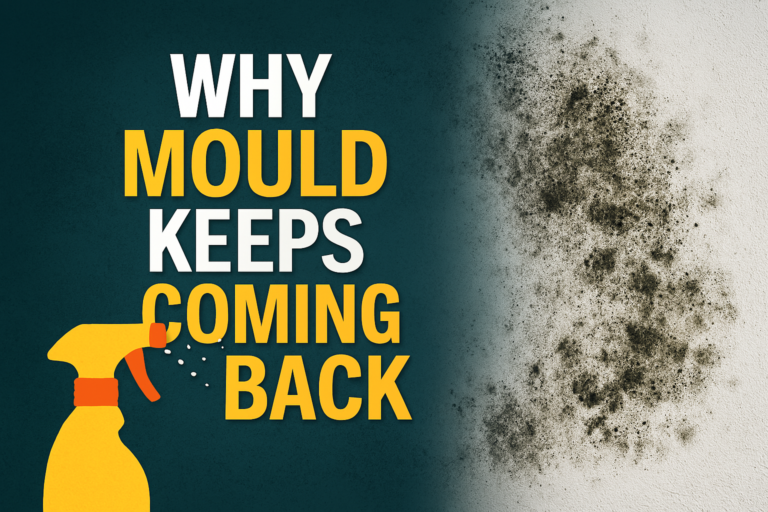
If your peeling wallpaper is accompanied by black mould spots, damp window sills every morning, and puddles of water on your double glazing, you are likely dealing with an environmental condensation issue rather than a structural leak.
Why Window Reveals Get Soaking Wet in Winter
Window reveals are structural cold bridges. Because the exterior brickwork wraps inward to meet the window frame, the interior plaster in that specific corner is exposed to freezing outdoor temperatures on two sides.
When your central heating is on, warm indoor air circulates the room. The moment that warm air sweeps across the freezing plaster of the window reveal, it cools down instantly. Cold air cannot hold as much moisture as warm air, so the water drops out of suspension and settles directly onto the wall surface. Because wallpaper adhesive is water-soluble, even minor daily condensation will quickly dissolve the glue, causing the paper to bubble and peel away.
The Role of Trickle Vents and Sealed Rooms
Modern energy efficiency has made condensation around windows epidemic. If you have recently installed airtight double or triple glazing without ensuring your trickle vents are open—or if you block background ventilation to save on heating bills—you trap every drop of household moisture inside the property. With nowhere else to go, that moisture settles on the coldest surface in the room: your window reveals.
How to Test and Diagnose the Source of the Leak
Do not guess whether it is a leak or condensation. Use a quick diagnostic checklist:
- Check the Weather: Does the peeling get significantly worse after heavy, wind-driven rain? If yes, suspect penetrating damp. Does it happen on freezing, dry winter mornings? If yes, suspect condensation.
- Check the Mould: Does the peeling area have black mould? Condensation creates mould because it provides pure, stagnant moisture. Penetrating damp carries ground and mortar salts that often inhibit heavy black mould growth, resulting instead in yellow staining or white, fluffy salt deposits.
- Check Room Humidity: Place an (Ad) ThermoPro TP50 Digital Hygrometer on the windowsill. If your room relative humidity is consistently above 60% during winter, your indoor air is fueling the problem.
- Scan the Plaster: Use a pinless moisture meter to trace the damp patch. If the moisture is heavily concentrated right at the external window frame joint and fades as you move inward to the room, it is an exterior leak. If the damp is spread evenly across the surface of the reveal, it is condensation.
Step-by-Step Guide to Repairing Peeling Wallpaper Around a Window
Once you have identified and fixed the root cause—whether by resealing the exterior frame with a high-grade (Ad) Exterior Waterproof Silicone Sealant or opening your window trickle vents—you can repair the damage:
- Strip the Damaged Paper: Peel away the loose wallpaper and scrape off any bubbling plaster or degraded paste.
- Treat the Area: Wash the reveal with a fungicidal wash to kill any unseen spores lurking beneath the surface.
- Prime and Seal: Apply a breathable damp-resistant primer or specialized anti-mould paste before re-papering or painting. Reveal areas are best painted with a durable, wipeable bathroom/kitchen emulsion rather than wallpaper, as painted reveals handle seasonal temperature shifts much better.
When to Call a Professional
If you have resealed the exterior window frame, kept your indoor humidity below 50%, and ensured your trickle vents are open, but the wallpaper around the window continues to peel and saturate every time it rains, you are dealing with a deeper structural defect, such as a failed cavity tray or damaged brickwork lintel.
If you suspect structural penetrating damp around your windows that requires professional repair, [click here to request a quote from an independent, vetted local damp surveyor or window specialist] to resolve the issue permanently.