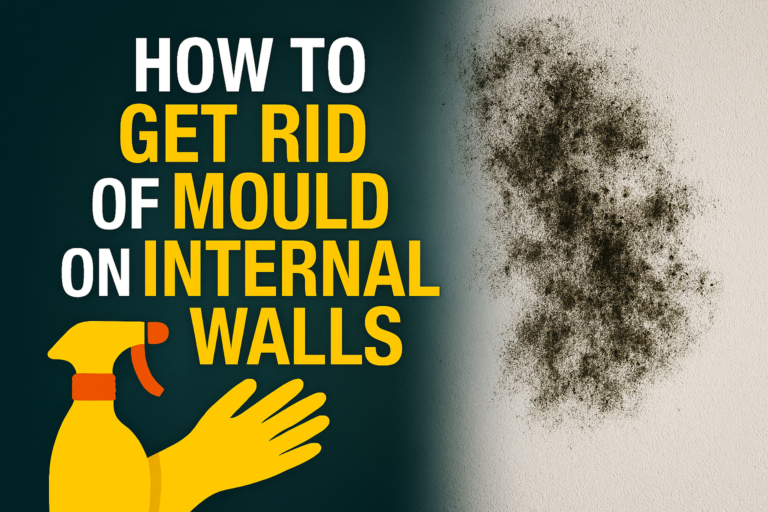
Why is Black Mould Growing Behind My Wardrobe but Not on the Ceiling?
Disclaimer: This article contains affiliate links. If you purchase through a link marked with (Ad), we may earn a small commission at no extra cost to you.
The Short Answer: Black mould grows behind wardrobes because the large, heavy furniture blocks the room’s warm air from reaching the wall. If that wall is an external wall, it becomes freezing cold. When normal indoor moisture (from breathing or drying clothes) drifts into that narrow, stagnant gap, it hits the cold plaster, condensates, and creates a perfectly damp, dark microclimate for mould spores to thrive. Your ceiling remains clear because warm air naturally rises, keeping the ceiling surface above the dew point.
The Science of Stagnant Air and Cold Walls
Finding a hidden patch of dense black mould (usually Stachybotrys chartarum or Aspergillus) behind a piece of furniture is one of the most common damp issues in UK homes. To fix it permanently, you have to understand the building physics at play.
It comes down to a battle between thermal bridging and stagnant air.
The Wardrobe Acts as Unwanted Insulation
Your central heating warms the air in your bedroom. That warm air travels around the room, gently heating the plaster on your walls and preventing condensation.
However, when you push a large, solid wooden wardrobe flush against an external wall, you block that airflow. The wardrobe effectively acts as internal insulation. It keeps the warmth inside the room, but prevents it from reaching the brickwork directly behind the furniture.
As the winter temperatures drop outside, that section of the wall becomes a “thermal bridge”—a freezing cold patch of plaster. When airborne moisture inevitably finds its way behind the wardrobe, it hits this cold patch, reaches its “dew point,” and turns into liquid water. Because there is no sunlight and zero airflow to dry it out, mould spores settle and rapidly multiply.
Why Your Ceiling Remains Mould-Free
You might wonder why the room’s ceiling or the adjacent walls are perfectly clean.
- Convection Currents: Warm air rises. The air near your ceiling is generally the warmest in the room, keeping the plaster surface temperature high enough to prevent condensation.
- Loft Insulation: Most modern ceilings have thick fiberglass insulation directly above them in the loft, preventing them from becoming freezing cold.
- Airflow: Unless you have furniture bolted to the ceiling, the air up there is constantly moving, allowing moisture to remain suspended in the air rather than settling on a surface.
How to Safely Clean Mould Off Your Wall and Wardrobe
Before you rearrange your bedroom to fix the airflow, you must kill the existing fungal growth. Spores spread easily, so wear a P3 respirator mask and rubber gloves before you begin.
Do not use standard household bleach.
Bleach is largely water-based and contains chlorine. While it will bleach the black colour out of the mould on a non-porous surface (like bathroom tiles), it cannot penetrate porous materials like plaster, wallpaper, or the MDF backing of your wardrobe. The water in the bleach actually feeds the roots, causing the mould to return aggressively a few weeks later.
Instead, use a dedicated biocidal wash designed specifically to penetrate and destroy the fungal roots. We recommend using (Ad) HG Mould Spray.
| Cleaning Agent | Kills Surface Spores? | Penetrates Plaster/Wood? | Prevents Regrowth? |
| Household Bleach | Yes (mostly bleaches colour) | No (roots survive) | No (adds water to roots) |
| White Vinegar (DIY) | Yes (up to 82% of species) | Mildly | Short-term |
| Professional Biocide | Yes (kills 99.9%) | Yes | Long-term |
The Cleaning Process:
- Lightly mist the affected wall and the back of the wardrobe with the biocidal spray. Do not scrub dry mould, as this releases millions of spores into your bedroom air.
- Leave the product to work for the manufacturer’s recommended time (usually 30 minutes).
- Wipe the area down with a damp, disposable microfiber cloth.
- Throw the cloth in a tied bin bag immediately. Do not wash and reuse it.
- Allow the wall and the furniture to dry completely before pushing the wardrobe back.
5 Steps to Stop Mould Returning Behind Heavy Furniture
Cleaning the mould is only a temporary fix. If you do not change the environmental conditions in that corner of the room, the condensation cycle will begin again tomorrow night. Implement these five steps to alter the microclimate.
1. The 50mm Air Gap Rule
Never push heavy furniture flush against a wall. You must leave a minimum gap of 50mm (2 inches) between the back of the wardrobe and the plaster. This simple physical change allows the room’s warm, ambient air to circulate behind the furniture, warming the wall surface and evaporating any minor condensation before it can support fungal growth.
2. Rethink the External Wall
If possible, do not place large wardrobes, heavy chest of drawers, or solid headboards against an external, weather-facing wall—especially north-facing walls, which receive the least sunlight and remain the coldest. Move large furniture to internal partition walls (walls that divide two rooms inside the house). These walls remain at room temperature, making condensation nearly impossible.
3. Monitor Your Relative Humidity
Condensation requires moisture. If your bedroom humidity is constantly above 65%, you are providing endless fuel for mould. Keep an eye on your indoor air quality by placing an (Ad) ThermoPro TP50 Digital Hygrometer on your bedside table.
If the humidity spikes when you sleep (due to respiration) or when you dry clothes, you know you need to open your window trickle vents or use a dehumidifier.
4. Use Passive Moisture Traps
If you cannot move the wardrobe and the air gap isn’t quite doing enough during deep winter, tackle the moisture locally. You can hang (Ad) Wardrobe Dehumidifier Bags (Calcium Chloride) directly inside the wardrobe, or place a plastic moisture trap on the floor in the gap behind it. These cheap crystals passively absorb excess moisture from the stagnant air, locking it away as a liquid brine before it can settle on the wall.
5. Maintain the 18°C Rule
In an effort to save on energy bills, many homeowners turn the radiators off in unused bedrooms, or let the house temperature plummet overnight. Cold air cannot hold moisture. When the room drops below 15°C, the moisture in the air rapidly dumps onto the coldest surfaces (like the wall behind your wardrobe). Try to maintain a constant baseline temperature of at least 18°C during the winter months to keep the walls warm and the moisture suspended in the air.
When to Consider Whole-House Ventilation (PIV)
If you have pulled your furniture away from the walls, cleaned the plaster, and kept the heating on, but the black mould continues to return, your property has a fundamental ventilation issue.
Homes built before 1950 were designed to be drafty. Modern retrofits—like double glazing, blocked chimneys, and thick loft insulation—seal the house like a Tupperware box. If your bedroom windows are dripping with water every morning and mould is spreading beyond the wardrobe, a localized fix won’t be enough.
You may need to look into a Positive Input Ventilation (PIV) unit. These systems sit in the loft and gently push filtered, dry air down into the house, displacing the stale, wet air and effectively curing condensation dampness property-wide.
Are you struggling with persistent mould that keeps coming back despite your best efforts? [Click here to request a quote for an independent damp survey or a PIV installation assessment] to solve your condensation problems permanently.