Condensation vs. Rising Damp: How to Read the Tide Marks on 1930s Ground Floor Walls
Disclaimer: This article contains affiliate links. If you purchase through a link marked with (Ad), we may earn a small commission at no extra cost to you.
The Short Answer:
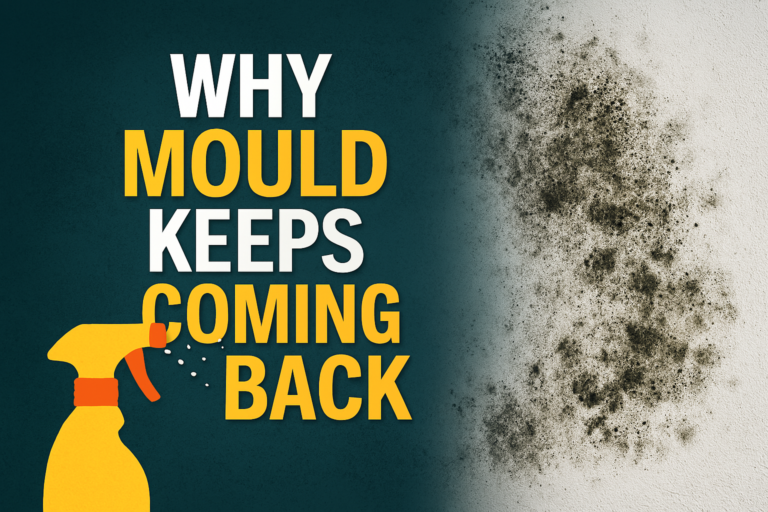
Rising damp comes from groundwater soaking upward through the brickwork, leaving a distinct horizontal “tide mark” of white salts and blown plaster no higher than 1 metre above the floor. Condensation comes from airborne moisture hitting cold walls, typically resulting in black mould (Stachybotrys) in cold corners, behind furniture, and around windows. True rising damp rarely produces black mould.
The Core Difference: Moisture from Below vs. Moisture from the Air
The UK’s 1930s housing stock is notorious for damp issues. These homes were built with solid floors and early bitumen damp proof courses (DPCs) that, after 90 years, can bridge or fail. However, modern living—sealed double glazing, blocked chimneys, and indoor drying—means condensation is misdiagnosed as rising damp every single day.
Understanding the physics of the water source is the only way to avoid paying for a useless chemical injection.
- Rising Damp is driven by capillary action. The bricks act like a sponge, sucking water from the soil up into the wall.
- Condensation is driven by thermal bridging and the dew point. Warm, wet indoor air hits a cold exterior wall, turns back into liquid water, and creates a breeding ground for spores.
How to Identify True Rising Damp (The 1-Metre Rule)
Rising damp is fighting gravity. Because of this, groundwater rarely travels higher than 1 to 1.2 metres up a ground-floor wall before evaporating.
Look for Tide Marks and Hygroscopic Salts
Groundwater is full of natural ground salts (nitrates and chlorides). As the water travels up the wall and evaporates into your living room, it leaves these salts behind. You will see a distinct, horizontal “tide mark” of white, fluffy deposits on the plaster. These salts are hygroscopic, meaning they actually attract moisture from the air, making the wall feel permanently wet even in summer.
Damaged Skirting Boards and Blown Plaster
Because rising damp physically saturates the masonry, it destroys building materials from the inside out. The plaster will bubble, crack, and fall off the wall (known as “blown” plaster). Skirting boards will often rot, warp, or show signs of fungal decay where they touch the wet brickwork.
How to Identify Condensation (Thermal Bridging)
If you have damp patches higher than 1.2 metres, or damp on first-floor ceilings, you do not have rising damp. You are dealing with condensation or a penetrating leak.
Black Mould is the Giveaway
Groundwater contains salts that prevent most black mould from growing. Therefore, if the damp patch is covered in black, spotted mould, it is almost certainly condensation. Mould thrives on the pure, distilled water created when indoor vapour condenses on cold surfaces.
Corner Dampness and Stagnant Air
Condensation targets the coldest parts of your 1930s home. You will find it in the corners of external walls (where thermal bridging is worst), behind heavy wardrobes pushed flush against the wall, and around window lintels where stagnant, moist air gets trapped.
Step-by-Step DIY Diagnosis: Testing Your Walls
Before calling a contractor, gather your own data. Placing your hand on a cold wall is not an accurate test.
To determine if the moisture is structural or airborne, use a pinless moisture meter. We recommend the (Ad) Protimeter Aquant because it uses radio frequencies to detect moisture up to 19mm behind the surface without leaving pinholes in your paintwork.
- If the meter reads high moisture deep inside the skirting board level, but low higher up, suspect rising damp.
- If the meter reads low, but the wall surface is wet, you have condensation.
Track your indoor air with an (Ad) ThermoPro TP50 Digital Hygrometer. If your ground floor consistently sits above 60% relative humidity during winter, your daily habits (cooking, drying clothes, breathing) are overloading the air with vapour, causing condensation on cold 1930s brickwork.
Comparison: Rising Damp vs. Condensation Symptoms
| Symptom | Rising Damp | Condensation |
| Black Mould | Very rare | Highly common |
| White Fluffy Salts | Common (Tide marks) | Never |
| Height on Wall | Ground floor only, max 1.2m | Anywhere (often corners/ceilings) |
| Plaster Condition | Bubbling, cracking, falling off | Intact, but stained or mouldy |
| Skirting Boards | Rotting, wet to the touch | Usually fine |
Fixing the Root Cause
If your diagnosis points to condensation, you must address ventilation and humidity immediately to stop the mould cycle. For unheated spaces or severe winter moisture, a desiccant or compressor unit like the (Ad) Meaco Arete One Dehumidifier physically extracts litres of water from the air before it can settle on your walls.
If you have identified the salty tide marks of rising damp, do not immediately accept a quote for a chemical injection. In many 1930s homes, the original DPC is perfectly fine, but has been “bridged” by raised patio slabs outside or debris in the wall cavity.
Need a professional assessment? [Click here to request a quote from an independent, vetted damp surveyor in your local area] who will diagnose the root cause without pushing unnecessary chemical treatments.